
Hey y’all!
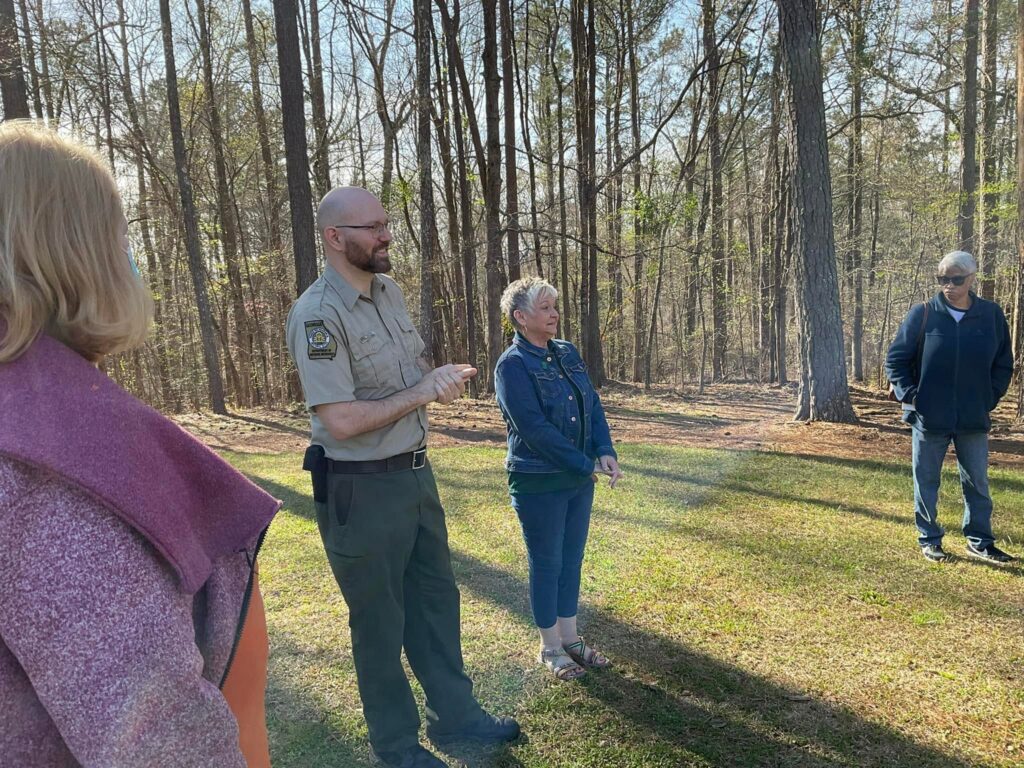
My goodness it is a year for milestones! Jarrell Plantation is celebratin’ its 50th anniversary as a State Historic Site! I loved hearin’ all about it from Mr. Derek Jackson, Jarrell Plantation’s Assistant Historic Site Manager, on the latest episode of Monroe Today with Ms. Gilda Stanbery.
Jarrell Plantation, located just outside Juliette on the other side of the Ocmulgee River, is a historic cotton farm owned for over 140 years by a single family, the Jarrells! The family donated the farm to the state in 1974, and two years later, it was open to the public as a Georgia State Historic Site.
“What’s really interesting there, is that we have all of the original items,” shared Mr. Derek. “So the farm buildings are still where the Jarrell family built them, but they’re also filled with the original furnishings, tools, and equipment. We can talk about when they industrialized the farm and brought steam-powered equipment and show how that works. You really get the sense that this is exactly how it was set up. This is exactly how they lived. When you get to see all of those things, I think it really stays with you. It’s not a bunch of empty buildings.”
The Jarrells went above and beyond to ensure the accuracy of how things were displayed. They left diagrams detailing where everythin’ sat when they lived there—the beds, the dressers, the tables. Several of the Jarrells who grew up on the farm still lived nearby. They came back to verify and help the state. The Jarrells also recorded interviews, capturin’ all that they could remember to share for the future.
The level of detail that the Jarrells ensured would be preserved reminds Mr. Derek of Thomas Jefferson’s Monticello in Virginia, where he interned while finishing his degree. “I was very inspired by what they do there and really the idea of teaching people about history, where it happened, where you can walk around and it’s still tangible. You can stand in those rooms and think about the people that lived there and the lives that they had. That just really excited me. When I finished my degree, I started looking for a place where I could do that full time. And that’s how I ended up at Jarrell Plantation!”
Jarrell Plantation is an accurate representation of the typical plantation homestead for Middle Georgia. The first farm at Jarrell is what’s left of a homestead from a larger plantation that was there with the original cabin John Fitz Jarrell built in 1847. Mr. Derek explained that a lot of that farm—a lot of its outbuildings, like John’s cotton gin—were destroyed durin’ Sherman’s March to the Sea. The second farm was built by his son Dick around the turn of the 20th century. Dick had left to be a teacher, travelin’ all over Georgia, but he returned to Jarrell to start and raise a family with his wife Mamie. They bought six acres and built a whole new farm with steam-powered equipment.
“There’s really two farms and that gives us an interesting opportunity to talk about the changes over time. We can talk about that early plantation. We can talk about the enslaved people that were there. Then we can talk about the changes. We can talk about how the equipment changed things and how life was much different. There was a lot more difficulty in the turn of the century era, leading up to the Great Depression. That second farm was very different in how it ran and how it worked. We have an opportunity to share this huge span of history at Jarrell Plantation.”
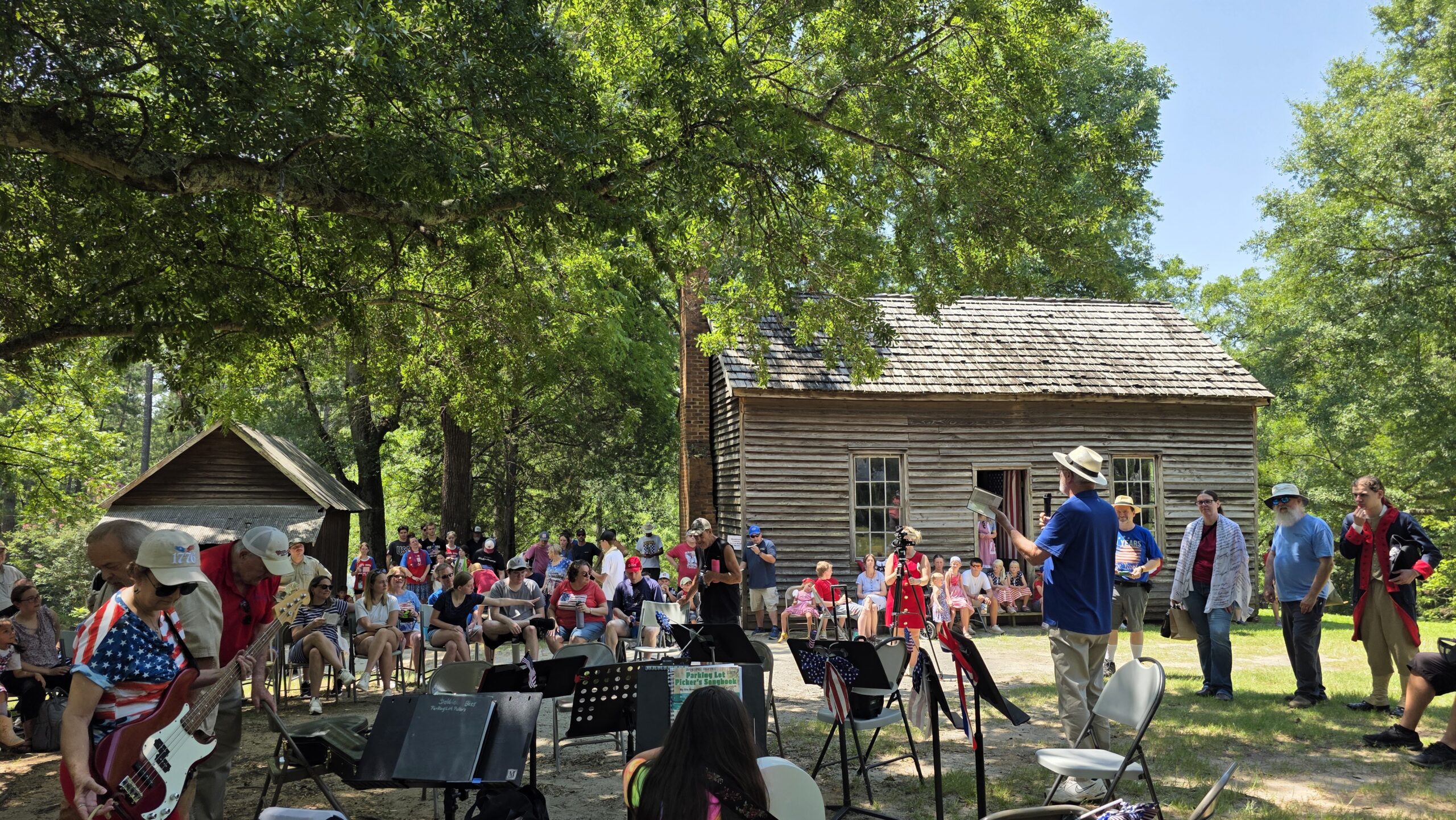
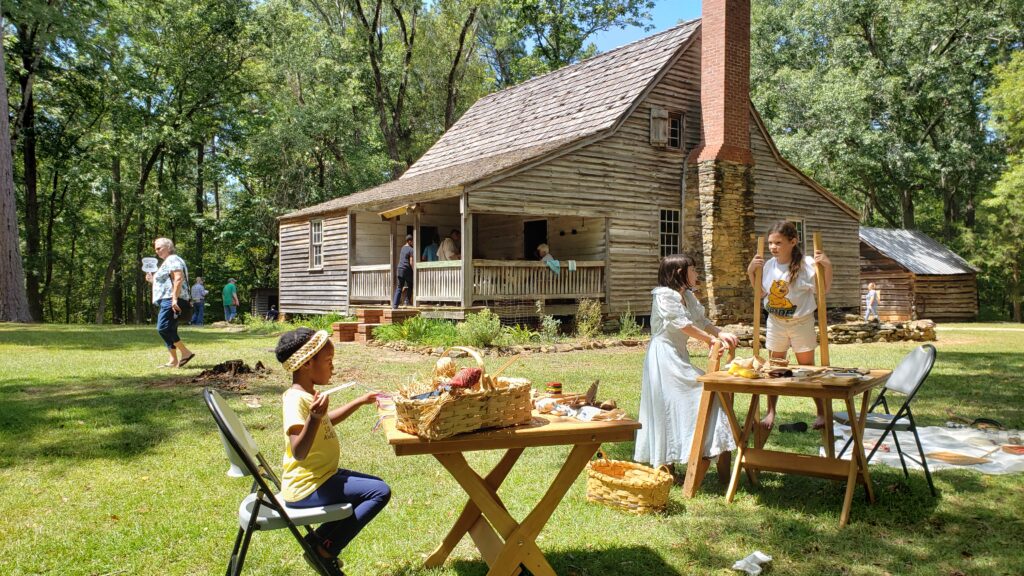
Another tangible way Jarrell Plantation helps visitors step back in time is through interpretive events, like its annual “Ol’ Time Fourth Celebration.” “It’s one of our oldest events that we do here,” said Mr. Derek. At the core of the event is a reading of the Declaration of Independence. Historic interpreters demonstrate farm skills like blacksmithing, and home skills like spinning, and weaving, and there’s even someone cooking on the old wood stove. There are also lots of fun old-fashioned games, and relays and races for the kids.
“Our main focus is education. We make it fun and interesting for everybody. We are always trying to teach people about the past and about the farm history of middle Georgia, coupled with fun and family-friendly activities.”
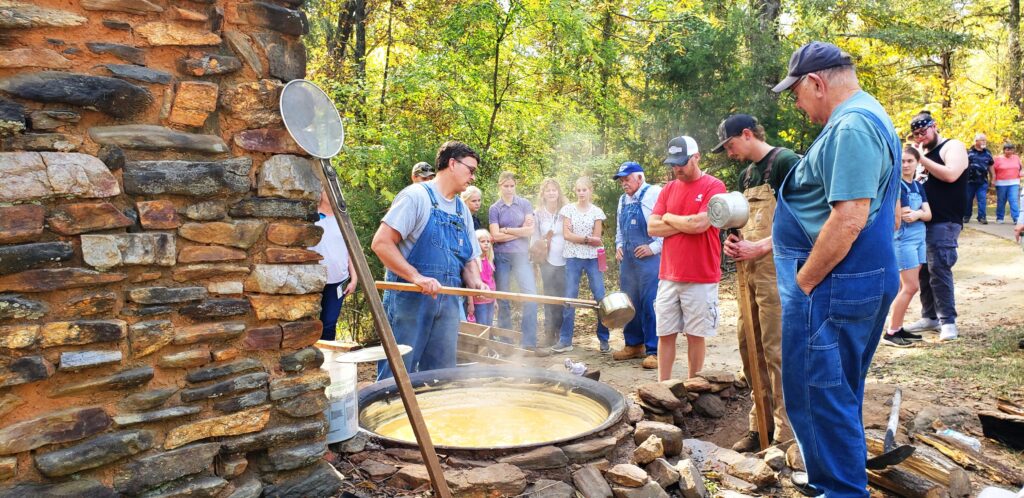
It is thanks to volunteers that Jarrell Plantation is really able to make demonstration events like the Ol’ Time Fourth a success. “You know, the staff does some things, but we really rely on volunteers for our events. We pull people from the community who love doing things like spinning, weaving, woodworking, basket making, all those things. Our events really wouldn’t happen without all of those volunteers wanting to come out and share.”
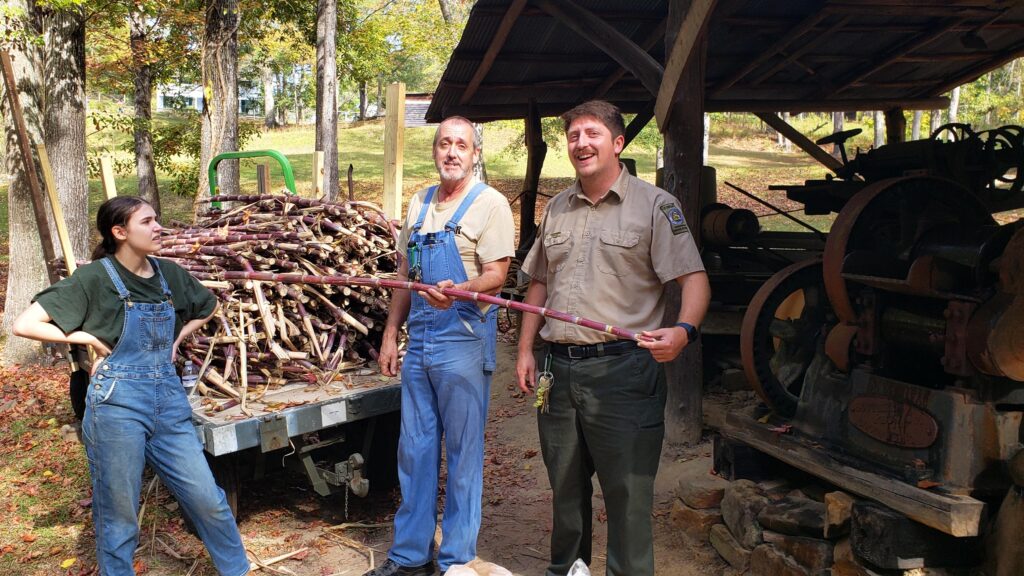
“We have a great staff. We have our senior ranger, Gary Thomas, he’s been there for 30 years or more. He’s got so much knowledge of the place and helps us keep everything standing basically. And then we have our newest employee. Brandon (Fountain) is our naturalist and he’s really brought a new component to the site because his specialty is plants. He’s doing a lot of nature hikes, tying in the history of the place with nature and the land itself. He talks about the cotton boll weevil arriving and how the land really changed and the forests came back. We take people on a nature hike and show them native plants that might have been used back in the day for medicines. Then we’ve got our clerk, Maggie. She’s been instrumental in making sure the events happen. She takes the reservations, but she also puts on a costume, tells stories, and does spinning demonstrations.”
With the 50th anniversary, Mr. Derek said, “We have a self-guided tour now, so this fall we’ll be able to add an audio tour to go with it.” There will also be house tours every Saturday in August. And they will be giving away commemorative 50th anniversary stickers. Be on the lookout this fall for Jarrell Plantation’s “Monumental Moments” programs, commemorating America’s 250th birthday!
Do give the radio show a listen below—I promise I didn’t give away all of Mr. Derek’s stories!
‘Til Next Time,
Your Storyteller