
Hey y’all!
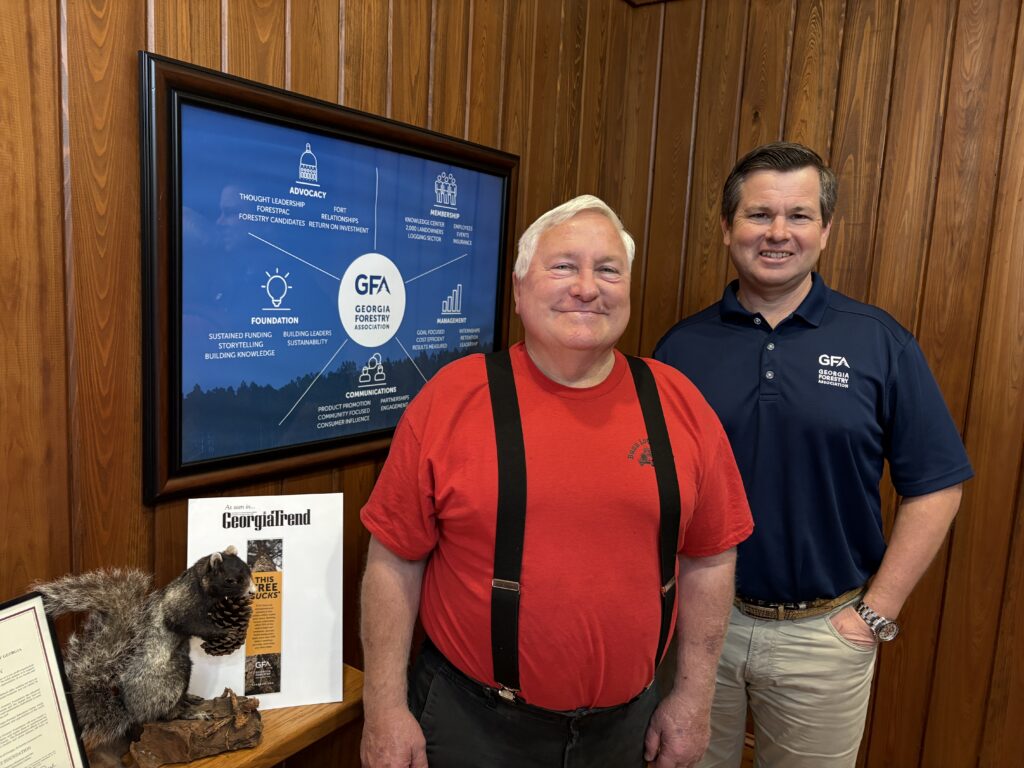
I’m here again with the latest from another highly informative episode of Monroe Today, where my good friend, Gilda Stanbery, had the honor of hosting two long-time members of the Georgia Forestry Association: Nipper Bunn (owner/operator of a multigenerational logging company in Monroe County) and Tim Lowrimore (President/CEO of the Georgia Forestry Association)! These esteemed gents joined Ms. Gilda in discussing the history and future of forestry in Monroe County, as well as the ever-evolvin’ forestry business we see in Georgia today.
History of Trees in Monroe County
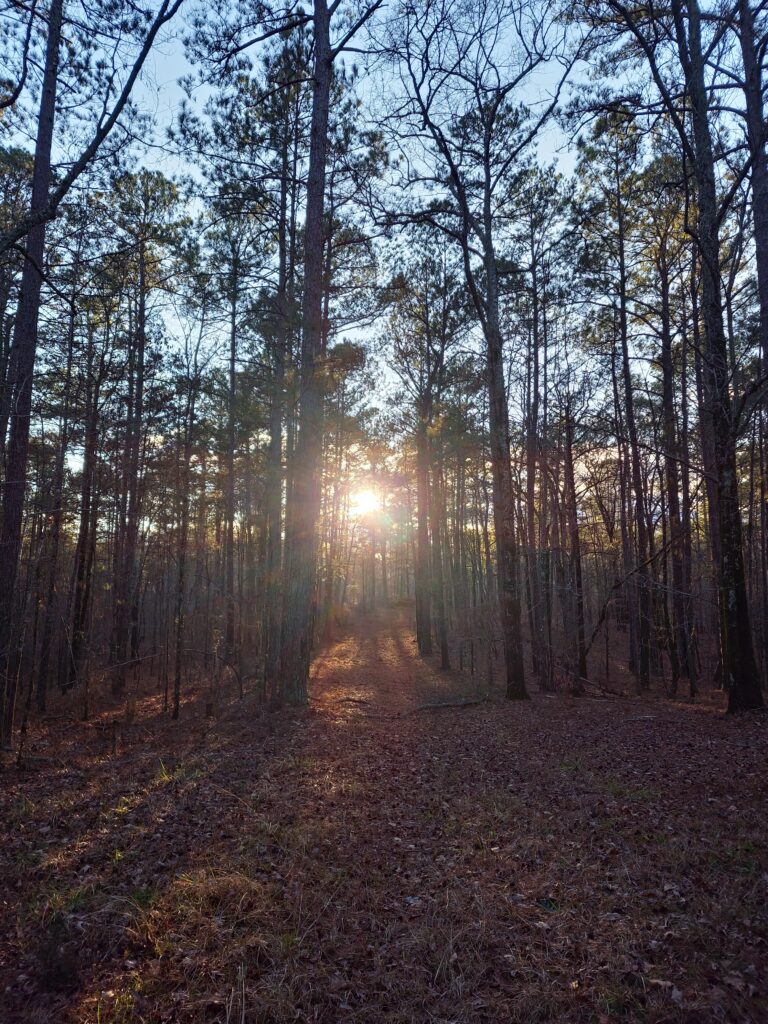
Trees, Mr. Nipper begins, are an “integral” piece of Monroe County’s history. Many people still see the county as a rural, agricultural hub—and they’d be right! But, before the forestry business began boomin’, there were plenty of cotton fields that made up Monroe County. Unfortunately for cotton farmers, the introduction of the boll weevil to Georgia in 1915 devastated the cotton crop. By 1930, cotton farmers had already suffered for so many years of poor harvest that the impact of the Great Depression was severely worsened. As fate would have it, pine and other trees naturally started to take root in the empty cotton fields, which provided ideal conditions for seeds carried by the wind and animals to thrive. A few trees led to a few more as they dropped more seeds, and before long people began to start intentionally plantin’ ’em as the timber industry took hold. In addition to lumber, pulp products such as paper and packaging made timber a popular—and profitable—commodity. Thus began a beautiful balance of harvestin’, replantin’, and reforestin’. Today, according to Mr. Tim, we have nearly 22 million acres of forest across the state, making up a whopping two-thirds of Georgia!
Healthy Markets make for Healthy Forests
Mr. Tim and Mr. Nipper expressed that the Georgia Forestry Association believes that the abundance of forest land we see in Georgia is directly tied to landowners and forest owners having markets for those trees. They went on to say that a healthy forest is a wisely managed forest and leads to a healthy market. A fairly easy sounding equation, but what does it really mean for commerce to be linked with the availability of trees, Ms. Gilda asked? Well, they explained, the types of trees determine their function: smaller trees go towards paper and pulp production, while larger trees go to a lumber market. Paper and pulp markets are important for good forest management. Inferior trees have to be taken out to make room for the growth of stronger ones. A good paper market ensures that those trees will be put to use, while allowing larger, more mature trees to be used for dimension lumber. This “saw timber” goes into buildin’ communities throughout the state and region, and plays a positive role in local governments and public services through ad valorem taxes.
Mr. Nipper, as a second-generation logger, has seen the forestry business change drastically over the years. When his father started loggin’ in 1948, not long after the first paper mill in Macon opened up, he and his brother would cut the trees by hand, haulin’ and loadin’ five-and-a-quarter-foot pieces onto trucks all by themselves. Over the years, the whole process has modernized into a highly mechanized business. They now use a joystick and grabber controls for harvestin’ whole trees, and have air-conditioned cabs (which I can imagine are much appreciated in our hot Georgia summers). Forestry is and always has been a huge part of the fabric of Georgia, and now the mission is larger than ever.


Data Centers and the Future of Forestry
Ms. Gilda made sure to ask the very important questions, of course, the ones on every environmentally conscious person’s mind these days. She asked about data centers, industrial uses of land, and the effects of technology on forestry. Mr. Tim answered, saying that, however you feel about data centers, there is a belief that we as a country need to be investing in data center technology in order to compete on a global level. For those in the space of forest production, they see it as a potential opportunity, if these data centers are going to be built, to introduce businesses to sustainable building practices through a product called “mass timber.” Usin’ mass timber for building data centers, rather than traditional concrete and steel, could benefit Georgia’s forestry community by increasing offtake from forests. Timber, along with livestock and poultry, is a top agricultural product for Monroe County, so this comes full circle. As Mr. Nipper explained, it’s just like the pioneers when they first came to Georgia—they built their homes with the trees around them. They built somethin’ permanent, yet also renewable. As we see a decline in the use of sawmills across the country, adaptation is key for forestry to survive. Ms. Gilda contributed, “There is always space to make things more environmentally friendly in construction. The implication of mass timber sounds like it’s achieving the plan of making things more green.” Mr. Tim shared that he is hopeful, proposing that this building practice could be a model for other industrial sites in the future, because data centers are coming. It’s a fact, it’s just a matter of how we manage ‘em and how we educate the “hyperscalers” on the importance of trees.
Join the Mission for Sustainability
Mr. Nipper and Mr. Tim encourage you to get out there, get involved, and talk to your local officials about sustainable building practices that you want to see in your community. This is the next path for Georgia and we need to utilize the trees wisely! Per Mr. Tim, “There is no better sustainability story than what the Georgia Forestry Association is and has demonstrated over the last century.” Today, we have more trees, more productive forests, more environmental, social, and economic benefits than we have ever had before.
‘Til Next Time,
Your Storyteller